Air charter guide
Turboprop vs Jet
A turboprop and a jet both burn jet fuel in a gas turbine. The difference is how the engine's power reaches the air, and that shapes speed, altitude, runway needs and the kind of trip each does best.
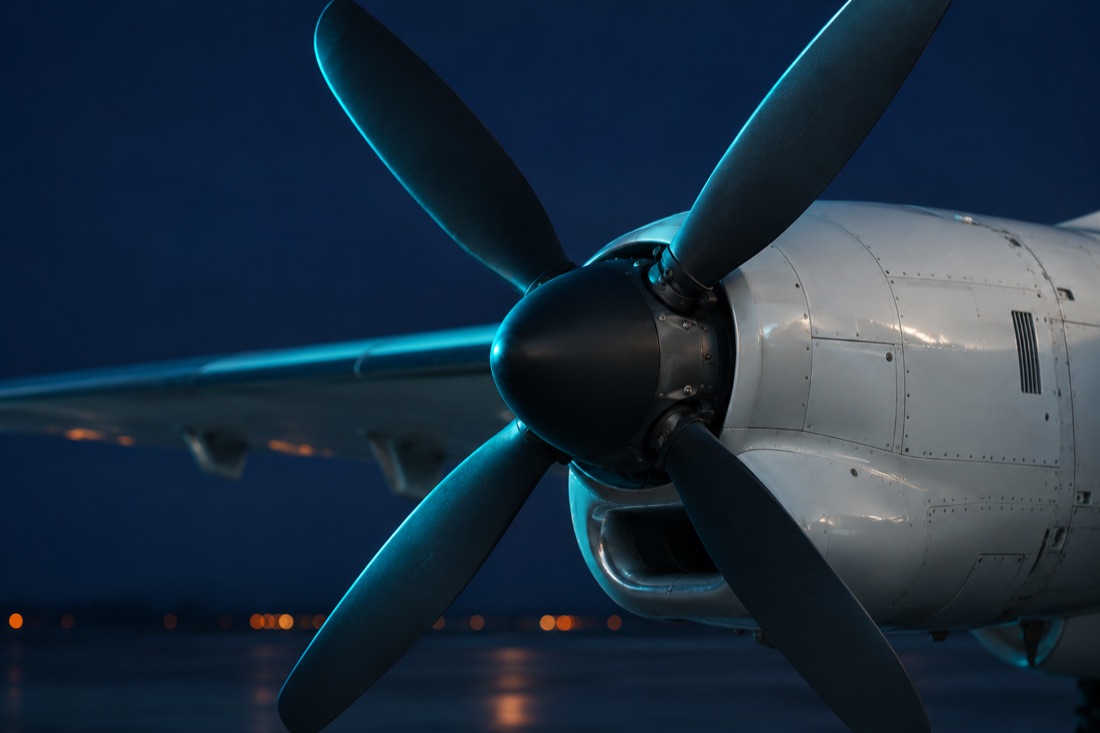
What is a turboprop
A turboprop is a gas turbine engine that drives a propeller through a reduction gearbox. Most of the thrust comes from the propeller pushing a large mass of air back at modest speed. In a turbofan or turbojet, the thrust comes mainly from air and exhaust accelerated through the engine itself.
So is a turboprop a jet? In engineering terms it belongs to the gas turbine family. In everyday use, "jet" usually means a turbofan or turbojet aircraft, and "turboprop" is treated as a separate category.
Turboprop vs jet in plain terms
- Speed: jets cruise faster. Propellers lose efficiency as speed approaches the speed of sound, so turboprops fly slower.
- Altitude: jets are built to cruise high, where the air is thin and efficient for them. Turboprops typically cruise lower.
- Short trips: on short sectors the speed advantage of a jet shrinks, because climb and descent take up a big share of the flight. This is where turboprops are often a sensible choice.
- Runways: many turboprops can operate from shorter or less developed runways, which opens up smaller airports. The exact figure depends on the aircraft type and its weight.
- Cabin: propeller noise and vibration are a more visible part of the experience, although modern designs have reduced them. Cabin size varies widely in both categories.
Is a turboprop safer than a jet?
Engine type alone does not decide safety. Certified aircraft of both kinds are built to regulatory standards, and what makes the difference in practice is the operator: crew training, maintenance, procedures and oversight. Rather than comparing engines, check the operator and its certificate.
Turboprop vs turbofan and piston
A turbofan puts a ducted fan in front of a gas turbine core and is the engine of most modern jets. A piston engine is a reciprocating engine like a car engine, driving a propeller; it powers many small training and private aircraft. A turboprop sits above piston in power and usually in price, and below a jet in speed.
Examples of turboprop aircraft
- Regional airliners such as the ATR 72 and the De Havilland Canada Dash 8 family.
- Single-engine turboprops such as the Pilatus PC-12 and the Cessna Caravan.
- Twin-engine business aircraft such as the Beechcraft King Air.
- Older commuter types such as the Embraer EMB 120 Brasilia, a 30-seat class aircraft that entered service in the 1980s.
When charter uses a turboprop
Turboprops suit short to medium trips, small groups and regional airports with shorter runways. For a long trip at high speed, a jet is usually the better fit. The best category is the one that matches your distance, passenger count and the airports at both ends.